
A cavity rarely appears overnight. Tooth decay is a gradual process, and a small problem on the surface of a tooth can become a much bigger one if it is left alone. Understanding how that progression works makes it easier to see why dentists place so much emphasis on catching changes early.
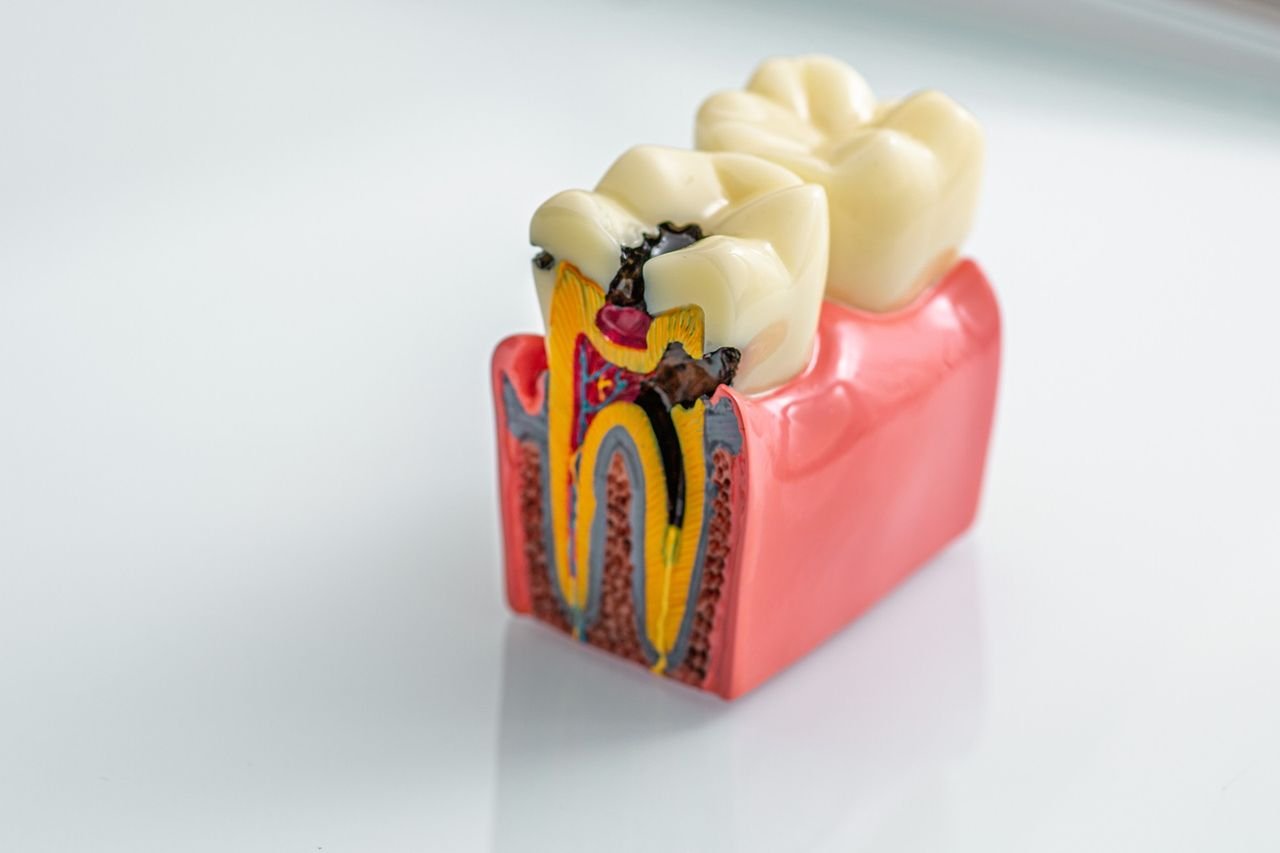
Tooth decay progresses through three layers: acid first pulls minerals out of the enamel, the damage can then spread into the softer dentin beneath, and it can eventually reach the pulp at the center of the tooth. Early decay usually causes no symptoms, so regular exams at University Dental Group are how small changes get noticed while they can still sometimes be stopped or reversed.
This guide walks through how tooth decay generally progresses, why the early stages are so easy to miss, and where restorative and preventative care fit in. It is general education, and a University Dental Group dentist is the right source for whether a particular tooth is affected.
How Tooth Decay Progresses
According to the National Institute of Dental and Craniofacial Research (NIDCR), the bacteria in plaque use the sugars and starches in food and drink to make acids, and those acids attack enamel, the hard outer layer of the tooth. Enamel loses minerals during each acid attack and regains some afterward, so decay begins when the loss outpaces the repair.
Beneath the enamel lies the dentin, which is softer, so once decay gets through the enamel it can spread through this layer more readily. Deeper still is the pulp, the center of the tooth, and a cavity that reaches it can turn into an infection, according to the American Dental Association (ADA). The table below summarizes that progression in general terms.
| Stage | What Is Happening | What You Might Notice |
|---|---|---|
| Enamel | Acids made by plaque bacteria pull minerals out of the outer layer | Usually no symptoms, though a white spot on the tooth can be a sign of early decay |
| Dentin | The enamel has broken down, and decay spreads through the softer layer beneath | Sensitivity can begin as decay advances, though this varies |
| Pulp | Decay reaches the center of the tooth, where the nerves and blood vessels are | A toothache or signs of infection such as swelling are possible, which is worth having a University Dental Group dentist examine promptly |
These stages are a general way of describing progression, not a diagnosis. Because the balance between mineral loss and repair differs from one tooth to the next, no single timeline applies to everyone.
The earliest stage is the one with the most room to act. A white spot on the enamel marks early decay that can sometimes be stopped or reversed, while a cavity that has already formed will not rebuild itself and needs a filling.

Why the Early Stages Are Easy to Miss
According to MedlinePlus, cavities often cause no symptoms, and pain tends to show up only once a cavity has grown large enough to affect the nerves. When symptoms do appear, they usually include an achy tooth, sensitivity to sweet, hot, or cold foods and drinks, or visible pits and dark spots on the tooth.
That is the central problem with tooth decay. By the time something hurts, the decay may already have moved past the enamel. Routine dental visits at University Dental Group are one of the main ways small changes get noticed before you can feel them.
A tooth that feels fine is not necessarily a healthy one. Early decay is usually silent, so an exam at University Dental Group is how you find out what you cannot feel.
Habits That Help Protect Your Teeth
Protection comes from a few steady habits. Brushing twice a day with fluoride toothpaste, cleaning between the teeth daily, and getting regular cleanings and exams all lower the odds of cavities. Saliva helps as well, because it carries minerals that support enamel after an acid attack.
| Habit | Why It Helps |
|---|---|
| Brushing with fluoride toothpaste and cleaning between the teeth | Removes plaque, the source of the acids that attack enamel, while fluoride helps enamel hold on to its minerals |
| Regular exams and cleanings | Give the University Dental Group team a chance to spot changes before they cause symptoms |
| Keeping your mouth from staying dry | Saliva rinses food particles away and supplies protective minerals, and dry mouth raises the risk of decay |
These habits work together. Daily care handles the surfaces you can reach, and routine visits cover what you cannot see.
Restorative Services at University Dental Group
University Dental Group offers restorative services for teeth that have been damaged, including damage from decay. Under this category, the practice provides tooth-colored composite fillings to repair cavities, as well as inlays, onlays, and custom porcelain crowns for teeth that need more structural support.
If a tooth has become sensitive, discolored, or sore, or you simply want to know whether decay is a concern, the practice's restorative services are the natural starting point. An exam with the practice's dentists is how you learn what, if anything, applies to your tooth.
Contact University Dental Group to schedule an evaluation.
Preventative Services at University Dental Group
Because early decay is so easy to miss, routine care is where problems tend to get noticed first. University Dental Group's preventative services cover that routine side of dental care, including cleanings every six months, complete oral exams with digital X-rays, fluoride varnish, and sealants for the chewing surfaces of back teeth.
If you are unsure where you stand, the University Dental Group team can help you decide on a next step.