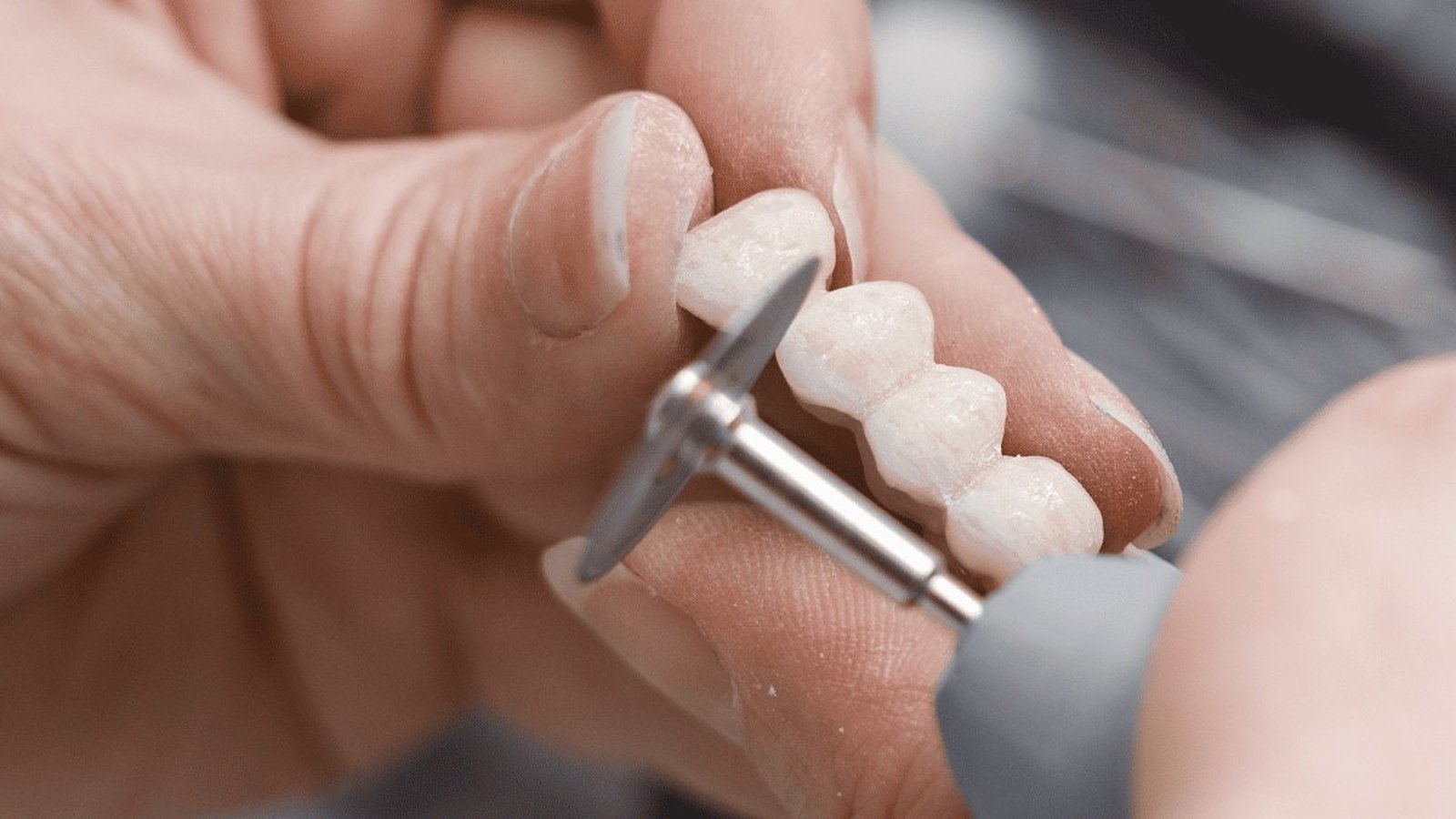

Most people researching dentures are not starting from scratch. They have been managing a few failing teeth for a while, and somewhere along the line the question shifted from whether to replace them to what replacing them actually involves.
This guide covers the main types of denture and who each one tends to suit, what the fitting process looks like across appointments, why adjustments are part of the plan rather than a problem, and what realistically changes about eating and speaking. It also covers the factors that determine cost, without pretending a number can be quoted before anyone has looked in your mouth.
Dentures come in several forms: complete, partial, and implant supported. Which one suits you depends on how many natural teeth remain, the condition of the underlying bone, and how much stability you need while eating. The fitting process runs across multiple appointments, and adjustments afterward are expected rather than a sign something went wrong.
The Main Types of Denture and Who Each One Suits
Dentures fall into a few broad categories, and the choice is driven by how many natural teeth remain and what the bone underneath looks like. All of them sit within restorative treatment, alongside crowns and bridges, because the goal is the same: restoring function and appearance where teeth have been lost.
Complete dentures
These replace a full arch, upper or lower, when no natural teeth remain in it. An upper complete denture covers the palate, which gives it a large surface area and helps it stay in place through suction. A lower complete denture has less surface to work with and has to accommodate the tongue, which is why lower dentures are generally harder to stabilize than upper ones.
Partial dentures
A partial fills in gaps while your remaining natural teeth stay in place. It uses those teeth for support, usually through clasps or precision attachments, so their condition matters a great deal to how well the partial performs. Partials also serve a second purpose beyond filling the space: they stop the neighboring teeth from drifting into the gap.
Implant supported dentures
Rather than resting on the gum tissue, this type anchors to a small number of dental implants placed in the jaw. Some versions snap on and off for cleaning, others are fixed in place. The advantage is stability, particularly on the lower arch where a conventional denture has the least to hold onto. The requirement is sufficient bone to place the implants, which is why the assessment includes imaging and why timing after extractions matters.
Immediate dentures
An immediate denture is placed the same day teeth are removed, so you are not without teeth during healing. The tradeoff is that gum and bone reshape considerably as the extraction sites heal, so an immediate denture usually needs relining or replacing once that settles. It is best understood as a transitional appliance rather than the final one.
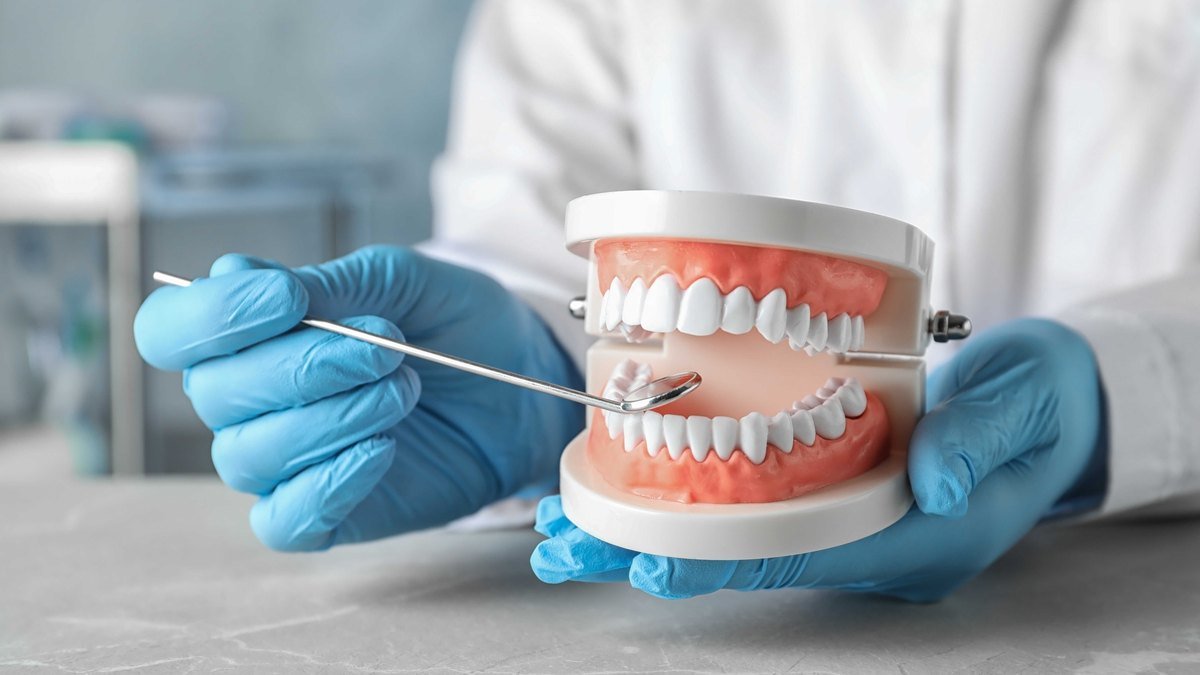
What the Fitting Process Involves, Appointment by Appointment
Dentures are not a single visit. The process typically runs across several appointments over a number of weeks, and each one exists because the next step depends on what happened in the last.
It starts with an examination and imaging to assess the remaining teeth, the gum tissue and the bone ridge underneath. Impressions or digital scans follow, then a series of records that capture how your upper and lower jaws relate to each other and where the bite should sit. Many practices then place a wax try in, essentially a preview you can look at and speak with before anything is finalized, so the shape, shade and tooth position can be adjusted while changes are still easy. The dentist you see should walk you through each stage before it happens rather than after.
If extractions are part of the plan, healing time is built into the schedule. Bone reshapes for months after teeth are removed, which is the single biggest reason a denture that fit well in week two can feel loose by month four.
How a Denture Should Fit, and Why Adjustments Are Normal
A well fitting denture rests evenly on the tissue without rocking, stays in place during normal speech, and does not create a sore spot that persists. What it will not do, especially in the first weeks, is feel invisible. There is an adaptation period, and it is real.
Sore spots in the early days are common and usually solved with a small adjustment rather than a remake. The fix takes minutes, so there is no reason to endure it or to try filing anything down yourself. Persistent looseness, clicking during speech, or a denture that drops when you laugh points to a fit issue that should be evaluated rather than managed with more adhesive.
Over the longer term, the ridge that supports a denture continues to resorb, because bone that no longer anchors tooth roots gradually loses volume. That is why relines and eventual replacement are part of owning a denture rather than a sign of poor workmanship. Implant supported designs slow this down, since the implants transmit chewing forces into the bone.
Eating, Speaking, and Daily Care
Expect a learning curve. Most people start with softer foods cut into smaller pieces, chewing on both sides at once to keep the denture balanced rather than tipping it. Sticky and very hard foods are the last things to come back, and some never fully do with a conventional denture. Speech usually normalizes within a few weeks, and reading aloud is a genuinely useful way to speed that up.
Daily care matters more than people expect. The American College of Prosthodontists, in evidence based guidelines developed with the American Dental Association, recommends cleaning dentures daily with a nonabrasive denture cleanser rather than regular toothpaste, soaking them in an appropriate solution, and leaving them out of the mouth for a period each day so the tissue can recover. Brushing the gums, tongue and palate still matters even with no natural teeth present, and regular preventive visits continue for tissue checks, fit assessment and oral cancer screening.
What Affects the Cost of Dentures
Several variables move the number, and they are clinical rather than arbitrary. Whether you need a complete or partial appliance, whether extractions are required first, how many implants a supported design calls for, whether bone grafting is needed before placement, and the materials used in the base and the teeth all change the scope of the work.
Coverage is the other half. Dental plans treat prosthetics differently from preventive care, with their own frequency limits and annual maximums, and replacement intervals are often capped. For patients without insurance, our membership plans are designed to make ongoing care more predictable. The only way to know what your own treatment involves is an evaluation, since the plan depends on what the imaging shows.
Schedule a consultation with our Orlando team and we will review what is realistic for your situation.
Frequently Asked Questions
How long does it take to get dentures?
The fitting process usually spans several appointments over a number of weeks, covering impressions, bite records, a try in and delivery. When extractions are involved, healing time is added before a final denture is made, which can extend the timeline by months. Immediate dentures shorten the period without teeth but are typically transitional.
Do dentures look natural?
Modern dentures are made with tooth shades, shapes and gum contours selected to suit your face, and the try in stage exists so you can evaluate the appearance before anything is finalized. How closely the result matches your previous smile depends on what records exist and on the anatomy the denture has to work with, which is worth discussing early.
Will I be able to eat normally with dentures?
Most people return to a wide range of foods, though there is an adaptation period and some textures stay difficult with a conventional denture. Chewing on both sides at once helps with stability. Implant supported designs generally allow a broader diet because they do not rely on suction and tissue contact alone.
What is the difference between a partial denture and a bridge?
A partial is removable and rests on the gums with support from remaining teeth. A bridge is fixed in place and is cemented to the teeth on either side of a gap, or supported by implants. The choice depends on how many teeth are missing, where they are, and the condition of the neighboring teeth.
How often do dentures need to be replaced?
There is no single interval, because the ridge supporting the denture keeps changing shape as bone resorbs. Relines address moderate changes without a full remake, while more significant change eventually calls for a new appliance. Regular fit checks catch the drift before it becomes a sore spot or a stability problem.
How much do dentures cost in Orlando?
It depends on whether the appliance is complete, partial or implant supported, whether extractions or grafting are needed first, the materials involved, and how your coverage applies. Those are case by case variables, so a figure quoted before an evaluation is guesswork. Ask for specifics once the assessment and imaging are done.
Can I sleep with my dentures in?
Current guidance from the American College of Prosthodontists and the American Dental Association is to leave dentures out for a period each day, typically overnight, so the tissue underneath can recover. Wearing them continuously is associated with tissue irritation and fungal infection. Your dentist will tell you if your situation calls for anything different.